It took me over 60 years to visit Spain, but the eight-day trip I enjoyed there this spring made the wait worthwhile. My wife and I had an enlightening journey through the past and present in Madrid, Toledo, Cordoba, Sevilla, Granada, Valencia, Montserrat and Barcelona, surrounded by wonderful people, fascinating sights and plenty of great coffee and food.
When my wife and I arrived in Madrid, we stretched our legs with a walk past the Puerta de Alcalá and Palacio de Communicaciones, just in time to see a parade of police officers marching from the Puerta del Sol to demand higher wages. We followed them to the Plaza de Neptuno, then continued past some government buildings (but not, apparently, the offices of El Ministerio del Tiempo) into the Parque del Buen Retiro. We got happily lost in the maze of the big park before eventually finding our way to the Monumento al rey Alfonso XII by the lake.
The next day, we joined our fellow Globus tourists on a ride past the Palacio Real, walk in the Plaza de España with its monument to the author of Don Quixote, Miguel de Cervantes, and then spent a few -- too few -- hours at the Museo Nacional del Prado, where we were awed by original artworks from Diego Velazquez, Francisco de Goya, El Greco (Domenikos Theotokopoulos) and others. The highlight of the day, however, was an excursion to the old but well preserved city of Toledo, with its Catedral Primada Santa María and ancient concentration of Arab, Gothic, Mudéjar, Renaissance and Baroque architecture.
In Cordoba the following day, we visited the Mezquita-Catedral (also known as the Mosque of the Caliphs) and were struck again by the mix of Muslim and Christian architecture, including the city's Roman bridge. It was reassuring to know that at one time centuries ago Jews, Christians and Muslims actually lived together peacefully.
In Sevilla the next day, we visited its expansive Plaza de España, the Casa de Pilatos, and spent time at Santa Iglesia Catedral, the largest Gothic cathedral in the world. My wife and I enjoyed walking around the neighborhood by the hotel and drinking another great cafe con leche (they seem readily available throughout the country). In the evening, we had dinner before watching a magnificent flamenco dance show at the El Palacio Andaluz.
La Alhambra, built in the 13th century as a city within the city of present-day Granada, was the highlight of the next day. It afforded us fabulous views of the rest of Granada, where we saw the first of many caves in which some Spaniards continue living today with modern conveniences such as electricity and wi-fi.
The Mediterranean Sea city of Valencia was our next stop. Once again, we observed how well the Roman, Moorish and Spanish past of the city has been preserved. We were equally impressed, however, with the very modern Ciudad De Las Artes y Las Ciencias and its futuristic architecture. A major highlight of the visit to Valencia, no doubt, was dinner at a seaside restaurant in which three different paella dishes were served.
Our last stop in Spain was Barcelona, a city which words -- English, Spanish or local Catalan -- and pictures can't fully describe. We strolled around the El Gotic neighborhood and, in the evening, walked down the Gran Via Corts de les Catalans to join thousands of others at the Font Magico. We took in the site of the 1992 Olympics and La Barceloneta and waterfront areas that have been revitalized in recent decades, as well as Santa-Montjuic.
While visiting Barcelona, we also took an excursion to Montserrat, whose Royal Basilica houses the Virgin Morenita, a Romaneque carving whose hand can be touched by pilgrims. Montserrat, like other places we visited in Spain, offers breathtaking views.
What I'll remember most about Barcelona, however, is the one-of-a-kind Basilica de la Sagrada Familia, designed by Antoni Gaudi in the late 19th century and still under construction today. It is scheduled to be completed in 2026, on the 100th anniversary of Gaudi's death. Since I hope it won't be another 60-plus years before I return to Spain, I look forward to seeing the finished basilica with millions of Spaniards, people of Spanish ancestry, and others fascinated by the country's past and present history and culture!
To see some pictures from my journey through Spain, check out my Instagram page at: https://www.instagram.com/charleybruns/.
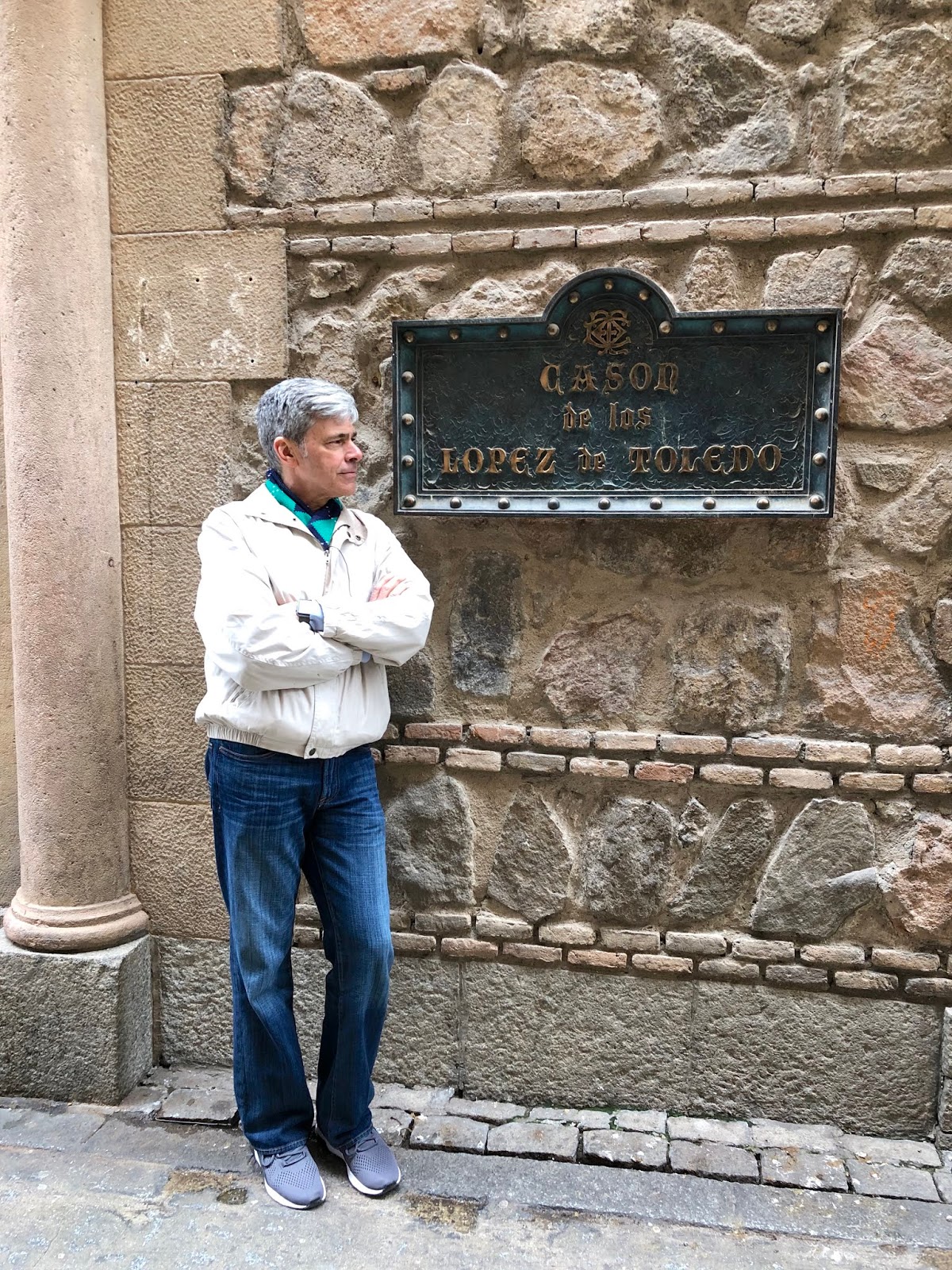
Born Charles Lopez to Cuban immigrants in New York City, Charley began using his stepfather's surname when he moved to New Jersey at 11 years of age. Charley also hopes to visit Cuba, where he spent a couple of his pre-school years, when the time is right.


