Monday, January 2, 2017

Starbucks: a personal history

Family and friends who know me as a coffee snob might be surprised to learn I was late to the Starbucks party. But, I've been making up for lost time.

Since I grew up drinking Cuban-style cafe con leche my mother learned to make from my abuela, before crafting them myself as a teenager, I never cared much for the Dunkin' Donuts or typical convenience store, diner or restaurant coffees widely available in New Jersey in the 1970s. With few exceptions, I would find them weak, tasteless or just plain awful. During the late '70s and early '80s, in fact, I would sometimes go to a Greenwich Village cafe on weekends to have great espresso-based coffee made for me and my date (who eventually became my wife).

New Jersey's first Starbucks cafe opened in Ridgewood in November 1993, according to the New York Times. Although it's hard to believe, the first New York City Starbucks cafe (at Broadway and 87th Street) didn't open until the following year, in April 1994.

It wasn't until March 2002 that I first tried Starbucks coffee. I was in Honolulu and, disappointed in the weak local kona coffee, I ventured into a Starbucks cafe across the street from my hotel and ordered a caffe latte. That first cup reminded me of my grandmother's coffee, which to that point in my life had only been matched by my mother and Cuban cafes on Bergenline Avenue in Union City, New Jersey. I went back to that Starbucks cafe every morning while I was in Honolulu. Today, almost 15 years later, I can still think of sitting in the balcony of my hotel room, overlooking the Pacific Ocean, when I enjoy a caffe latte.

When I returned from Hawaii, I sought out local Starbucks cafes and never was disappointed by their coffee or service. Whether I was in the U.S. or Europe, I would be impressed by the consistency of their quality and pleased by their friendly employees. Away from home, I would find some comfort relaxing in their cafes with a morning or afternoon caffe latte.

When we visited our eldest son in college, my wife and I and our youngest son would stop at a Starbucks in White Plains and order coffees for the ride home. During the nearly fours years I worked in midtown Manhattan, I looked forward to stepping out to a nearby Starbucks some afternoons for a pick-me-up coffee to bring back to the office.

My tastes eventually expanded to appreciate some of their other drinks, including pumpkin space latte, chai tai latte and smoothies (typically with a shot of espresso added). Along with the classic caffe latte, my favorite Starbucks coffee is the flat white with some vanilla powder mixed in and a dash of cinnamon on top.  

Today, less than 25 years later after they first appeared in the New York metropolitan area, there are over 100 Starbucks locations in New Jersey and almost 250 in New York City, and that's not counting book stores, hotels and other businesses that "proudly serve" Starbucks coffees.

Although Starbucks has managed to grow exponentially without compromising the quality of their beverages, the same can't be said of their service. Not all baristas are friendly, and a clean, comfortable cafe in which to relax is no longer a given. I guess that's to be expected from a chain that grew from 17 U.S. locations in 1987 to 22,519 globally on June 28, 2015 (according to www.starbucks.com) and now has almost 240,000 employees, few of which are likely to make it their career.   

I still enjoy an espresso-based coffee at a Greenwich Village cafe. I'm grateful for the increasing number of Cuban cafes appearing across New Jersey and New York, the ones of which I've sampled offer outstanding coffees. I'm pleasantly surprised by the quality of McCafe coffees, and in fact have stopped at McDonald's just for their lattes. My family continues to get a kick out of the different espresso coffees I craft for them. 

I still find satisfactory coffees at diners and restaurants few and far in between, and usually don't bother ordering them at the end of my meals anymore.  I still haven't tasted a good cup of coffee from Dunkin' Donuts, even though there is one less than two blocks from my home. The convenience store coffees I've tried have been unremarkable.

A Starbucks cafe when I'm away from home and wanting a great cup of coffee, on the other hand, remains a welcome sight. I've enjoyed making up for lost time, coffee snob that I am. 

Relaxing at a Starbucks cafe in Zurich, Switzerland; March 2011
  

Friday, November 11, 2016

Appreciating our Vietnam veterans

To a generation of Americans, the Vietnam War era is a dark chapter in U.S. history. The mid-1960s to early 1970s, when U.S. involvement in Vietnam was most intense, was a turbulent period. The country seemed divided like it had not been since the Civil War 100 years earlier. Unprecedented numbers of people questioned whether American lives should be risked in battlefields. Some young Americans resisted the call from Uncle Sam to serve in the armed forces.

Over nine million Americans were on active military duty during the Vietnam War. Of those, 2,709,918 served in Vietnam. Nearly 60,000 never made it home alive. Approximately 75,000 returned to the U.S. severely disabled.

According to Capt. Marshall Hanson, USNR (Ret.) and Capt. Scott Beaton as cited in the US Wings website, 85 percent of Vietnam veterans made successful transitions to civilian life. Also, 91 percent say they are glad they served and 74 percent say they would serve again (even knowing the outcome). Still, it took years for many Americans to fully appreciate the sacrifice of Vietnam veterans.

Among those who served in Vietnam are volunteers at the Vietnam Veterans Memorial and Vietnam Era Museum & Educational Center in Holmdel, N.J. In addition to answering questions and providing guided tours, these veterans share information about the war and their time in Vietnam with 8,000-10,000 high school students who each year visit the museum, the only one of its kind in the U.S. What the veterans have to say is sometimes difficult for fellow Americans to hear.

During a recent visit to the memorial and museum, I heard one volunteer recall a woman not wanting to sit next to a returning Vietnam veteran on a plane because he was a "baby killer." Another museum volunteer said he told people he was stationed in Germany rather than Vietnam for 20 years afterward because of the hostility he faced. Other volunteers remembered being yelled at by anti-war protesters.

I also heard a volunteer say he feels closer to other veterans at the memorial and museum than his own brother and childhood friends. That's because of the experience and passion they share to educate young people about the Vietnam War. As I left, I thanked one of the volunteers for not only the interesting tour and information he shared with me, but for his duty in Vietnam.

The great majority of Vietnam veterans are now well past 60 years old.  Let's hope they can live their "golden years" knowing that Americans appreciate their service during a difficult time in our country.

Wednesday, November 9, 2016

After the election

Yesterday was sunny, unseasonably warm.
Outside our door, we could see surfers riding the waves.

“We can’t lose, it’s election day
We can choose, it's election day
The sun is gonna rise
The stars are gonna fly”
— from Election Day, by Walter Salas-Humara and Sam Bisbee, 2011

Today is damp, autumn-like cool.
Outside our door, we can see surfers riding the waves.

Wednesday, October 19, 2016

Abandoned and Homeless


Abandoned

They protected New York Harbor
a century ago, 
but now sit stripped
of their artillery.

In their place today grow weeds
and roam wildlife, bicyclists, casual strollers,
all warned:

“Cautious. Hazardous Area.
No unauthorized personnel 
beyond this point.”

“Extremely Hazardous Conditions.
Area Closed.”

By Fort Hancock in Sandy Hook,
skeletons of armaments erode, 
tortoise crawl across paths,
deer stand on the side of roads,
abandoned by the US Army,
left alone by summer sunbathers.

Abandoned they may feel in autumn,
abandoned again they will be in winter.


---

Homeless

The homeless man with the bushy gray beard
pushed the baby carriage
through the lot,
stopping at the sight
of a small black car.

“I ain’t seen one of these
in a long time,” he said.

Minutes later, the man sat down
and put tobacco into a cigarette roller.
He looked up at me, 
having stepped out of the black Fiero 
and now sipping a cafe con leche,
and he began to speak, clearly.

“My first car was a ’70 Thunderbird.”

With a startled smile, I replied,
“So was mine.” 

After a few minutes of conversation
about Thunderbirds, Fieros
and British sports cars,
the homeless man put his roller and cigarettes
into the baby carriage
and began to walk away.

“Have a good day,” he said,
and then paused, and asked,
“Can you spare a few dollars?” 

“Sure, I can spare a few dollars
for you,” I replied. 
Then I paused, and asked,
“Can you do me a favor?”

He looked at me.
I looked at him.

“Can you pose for a picture
with my car?” I asked.

“Sure,” he replied.
“With or without my carriage?”

“It’s up to you,” I said.
“How ever you want to do it.”

He took a moment
to comb his hair
and brush his beard
before walking over
to the Fiero.

He stood next to the black car
without his carriage,
and posed with his hand
on the roof like he owned it,
just as we did our Thunderbirds
many, many autumns ago.


Wednesday, September 7, 2016

Greenwich Village, 2016

Things are the same
and things change.
Porto Rico is still
where it’s always been,
But Old El Paso
has gone Italian.

Caffe Reggio on Mcdougal
since nineteen twenty-seven
hasn’t changed one bit
except for the prices,
of course.

Students walk by
in the late afternoon,
as young as ever,
perhaps as ambitious
and idealistic as ever.
Certainly, more diverse
than ever.

Today, Greenwich Village
reflects the constant
and the changes
in New York City,
perhaps the US
and our world
as well.

May it ever be so.


Wednesday, July 27, 2016

Goosebumps


So, as I parked my car in Asbury Park, this big goose calls me from across the street. "Hey, you, with the tie-dyed shirt and that beautiful woman. Take my picture. Take it now, before the sun sets!" 
So, I did.

Tuesday, May 24, 2016

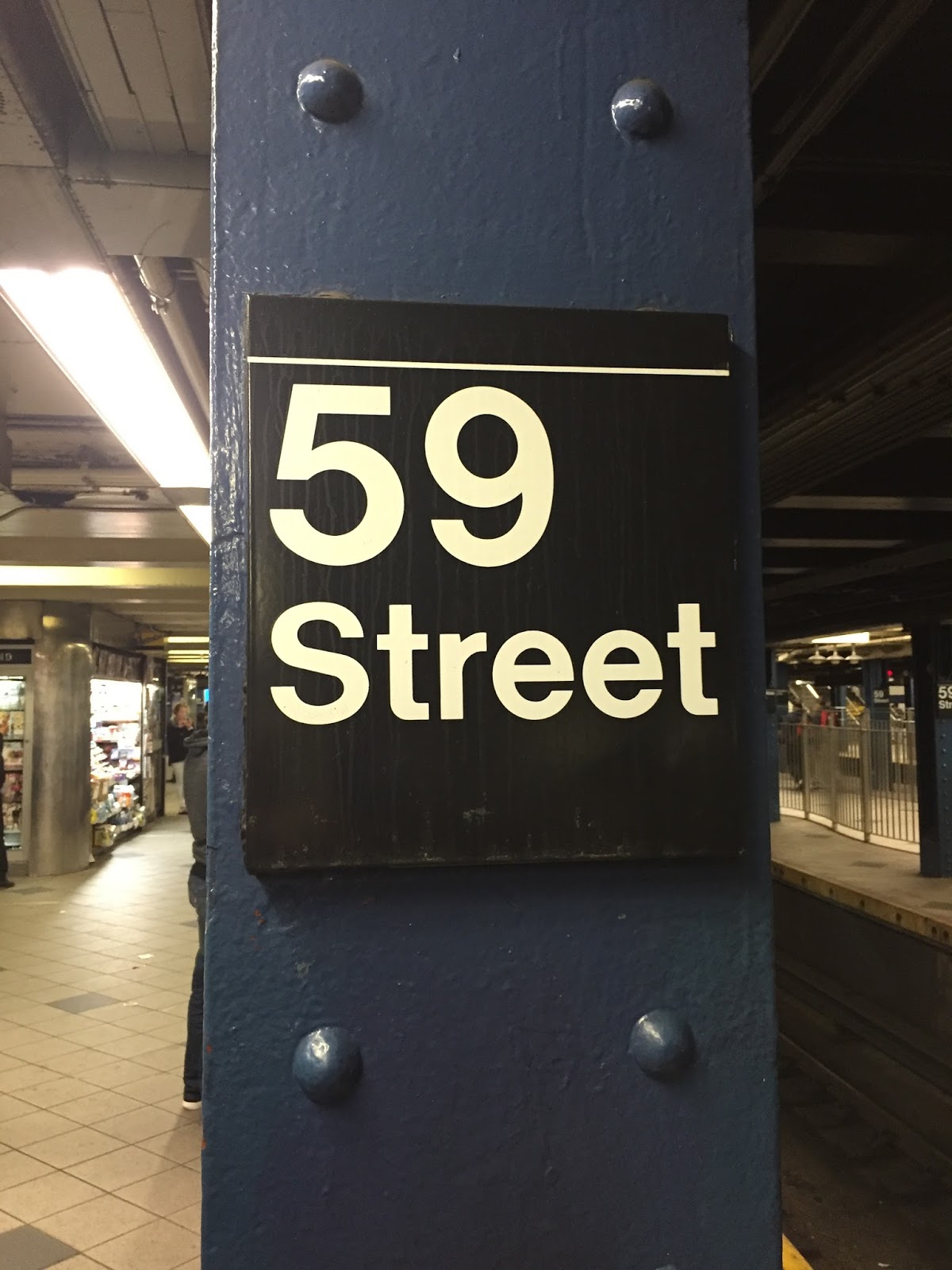
Ballad of the 59th Street Subway Station

by Lou Bruns


Deep to the bowels where the smells and stench reek,
go the strong men and women, the fools and the meek.
But the scene here unfolds, like a madman's nightmare,
and if you are sane you'll just stay away from there.

The stage is New York, and the actors are men,
with strong supporting roles from the dead and the damned.
The setting’s all perfect...a bum’s at the door,
and then from a distance, you hear a dull roar.

The station is cleared for the coming onslaught,
the transit cop waits, his nerves tied in knots.
And then from the earth comes the five o'clock train,
rolling and rocking like an old drunken lame.

Hundreds and thousands (and then maybe more),
were squashed in that train, right up to the door.
The train grinds its wheels to force itself halt,
and then from the cars came a flash and a bolt.

Hundreds and thousands crammed fighting for space,
it mattered not who you were or what was your race.
And then from the lungs came a cry of despair,
it seems that another train had pulled up in there.

Fat ladies and models; yes even the meek,
the hippies, the hardhats, the cops and the freaks.
They all pushed and shoved to get down the hall,
and out through the gates where the smog greets them all.

For some odd ten minutes, this scene here went by,
and all that I've written is not just a lie.
The screams of the infants, whose mom’s breast they wish,
the odor of armpits that smelled like old fish.

Then suddenly, as if God himself heard our call,
the station went quiet; you could hear a pin fall.
And the wino; whose eyes have just witnessed this scene,
swore off of the bottle, to prevent more DTs.


Written by Lou Bruns with pen on paper in spring of 1972, now published digitally for the first time.